

View from the Canopy Walkway, Lambir Hills National Park, 1994 © Michael Doolittle
Monograph Series
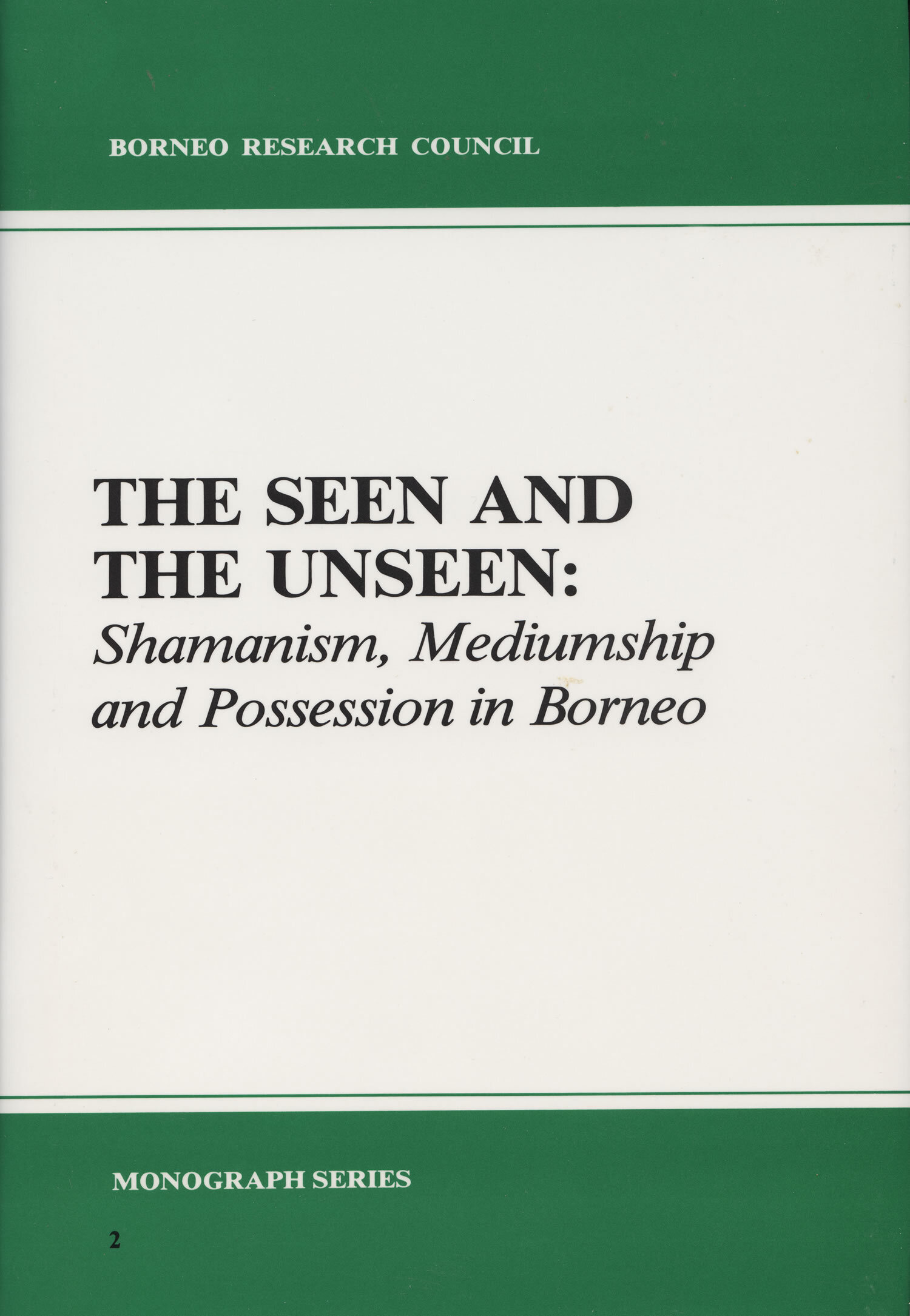
Robert L. Winzeler, Editor
This second monograph deals with spirituality – with its psychological roots, its symbolic elaboration and performance. Traditions of shamanism, mediumship, and possession in Borneo are rich, complex, and diverse. The essays, which compromise this volume, document and analyze a much wider range of ethnographic instances than has previously been assembled. Together they show both the enduring vitality of Bornean spirituality as practice, belief, and role and the evolving development of these in the present world.
Hardback
ISBN 0-9629568-1-3
1993
Discounted shipping rates for large orders are possible if an order is placed via email at brc@borneoresearchcouncil.org.
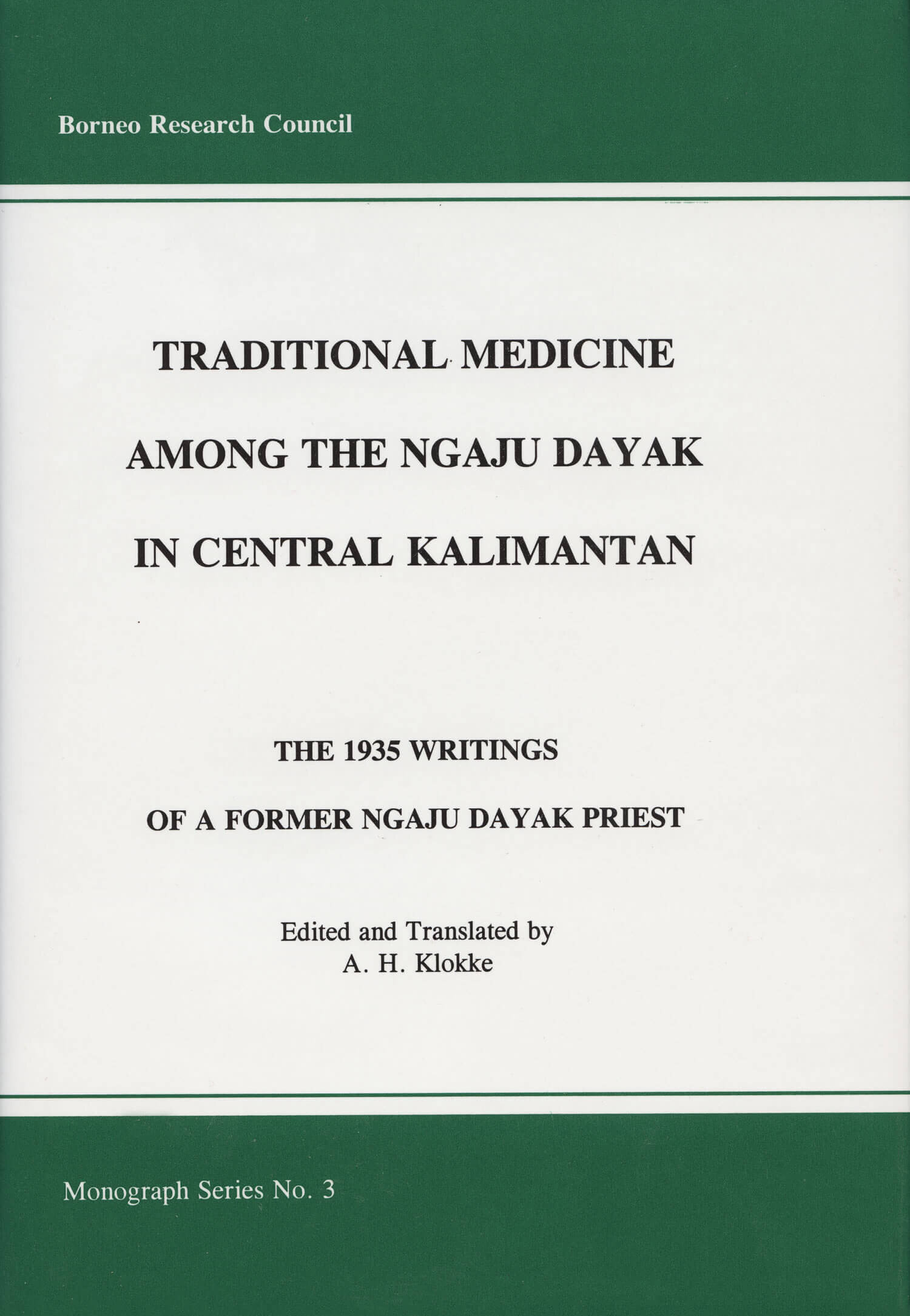
A.H. Klokke, Editor
Salilah, the author of this text on Ngaju medical practices, was a Ngaju Dayak priest and one of Dr. Schärer’s informants. In the 1930s he began training as a medical assistant at the missionary hospital founded by the Basler Mission. Here in 1935, Ruth Spiller, a Swiss nurse, persuaded Salilah to write about traditional medicine in order to assist the staff, and it is due to her that we now have this important text.
In the text is a list of diseases and their treatments. There is a chapter on various types of magic spells (panyangka), including those to counteract attempts at poisoning. There is a list of diseases for which smoke produced by burning plant materials is used as a treatment. Taboos surrounding pregnancy and childbirth are fully listed. And procedures involved in the worship of Jata, the goddess of the Underworld are described.
Finally, Salilah gives an account of the procedures carried out by the priest in treating a patient, including the ceremonies used, the various types of spirits and their effects on people, and the calling up of spirit helpers to aid in the treatment.
Hardback
ISBN 0-9629568-7-2
1999
Discounted shipping rates for large orders are possible if an order is placed via email at brc@borneoresearchcouncil.org.

By Eva Maria Kershaw
The monograph's subtitle highlights the most dynamic factor for the decline of the minority religion studied: The urge for cultural hegemony on the part of the Malay-dominated, Muslim state of Brunei. But the main, moral justification for the study is simply the fact of its decline and impending disappearance, attributable to many factors apart from state imperatives. Urbanization, the decline of rice cultivation, and the redundancy of traditional healing are all relevant. Each factor impinges directly and damagingly on the role of the religious practitioner and repository: the female belian.
At a theoretical level the author relates the belian role to recent discussions of shamanism, and favors an eclectic classification not only of shaman, but medium and priest. At an interpretative level, the study deals with different manifestations of the unseen, from the Dusun Creator, through demons, to derato the defining "companion" of the belian during rituals. Empirically, the monograph offers extensive description of the training and behavior of the belian, as well as the varieties of temarok ritual, and a minute-by-minute record of two performances. Such description depends on close observation as the belian are not able, or certainly not allowed, to talk about their experience as conduits of divine presence.
Hardback
ISBN 1-929900-01-5
2000
Discounted shipping rates for large orders are possible if an order is placed via email at brc@borneoresearchcouncil.org.

By Christine Helliwell
This monograph provides an account of sociality in a Dayak community in southwest Borneo, demonstrating the importance of both rice and ritualized hearths in the formation and maintenance of social relations there. It is the first detailed ethnography to be published of a Dayak people from the southern part of Kalimantan Barat (Indonesian West Borneo), a region about which academics currently know very little. It offers a further major contribution in three rather different areas of the literature. Firstly, it suggests that the conventional stress in anthropological studies of Borneo societies on the household, both as the basis of social organization and as an independent unit, needs to be re-examined. In this society, at least, not only is the household not a significant grouping, but it also would be quite erroneous to describe those groupings which are significant as independent from wider social networks.
Secondly, the monograph challenges a number of more conventional anthropological approaches to the study of social organization -- including both the 'descent theory' model and Lévi-Strauss's "house society" model -- and, like the "new Melanesian ethnography," draws out the fundamental ethnocentrism of a focus on discrete social groups when analyzing social relations among peoples for whom individual, group and community may not be clearly demarcated. Finally, it critiques aspects of the classical ethnographic method, and particularly its privileging of visual data, arguing that this predisposes us to understand social relations in certain limited terms.
Hardback
ISBN 1-929900-02-3
2001
Discounted shipping rates for large orders are possible if an order is placed via email at brc@borneoresearchcouncil.org.

A. V. M. Horton, Editor
Ivor Hugh Norman Evans (1886-1957) enjoyed a long, intimate and productive relationship with North Borneo (Malaysian Sabah), and, in particular, with the Dusuns of the Tempasuk region, and to a lesser extent the neighbouring Tuaran. That special relationship and the close bonds of affection which Evans formed and nurtured with many native people during his residence in the territory are given expression in his Bornean Diaries, 1938-1942. We can count ourselves fortunate that most of the personal records of Evans's sojourn in Dusun country survived the Japanese occupation.
The Diaries commence on October 29, 1938, and draw to a close on May 3, 1942, with the addition of a "Preface," "Epilogue" and a final section on "Characters of Some Dusuns who figure in these Diaries." The entries from September 4, 1940, to November 7, 1941, are missing. Some extracts from the Diaries were published in the Sarawak Museum Journal (1955, 1956), and direct quotations also appear in Evans's The Religion of the Tempasuk Dusuns of North Borneo (1953).
In a foreword to the Diaries Professor Victor T. King (University of Hull) evaluates Evans's current standing as an ethnographer and folklorist. Evans's personal reminiscences, King argues, "give us considerable insight into his [Evans's] methods of data collection; they show us the ethnographer at work, his particular interests and motivations, his relations with local people, his opinions of his informants, evaluations of the quality and content of the information given, and his personal views of the events and activities which he observed."
The Diaries have been annotated by Mr. A. V. M. Horton, who also provides an introduction.
I. H. N. Evans (1886-1957), a British ethnographer and archaeologist, was educated at Charterhouse School in Godalming (Surrey) and at Clare College, University of Cambridge. After a brief spell as a cadet in the British North Borneo Company's Service (1910-1911), he was employed as a curator in Malaya for twenty years (1912-1932), spent mostly at the Perak Museum in Taiping. He retired in 1932 and settled at Oulton Broad in Suffolk until 1938. He then returned to Borneo, where he spent the remainder of his life. Detained by the Japanese in Kuching during the war years (1942-1945), he died in Labuan on May 3, 1957.
Evans's best publication is considered by informed critics to be his 1937 book, The Negritos of Malaya (Cambridge University Press, Cambridge), re-issued in 1968 by Frank Cass, London.
Hardback
ISBN 1-929900-03-1
(Because of the size of this book, overseas orders will be charged actual shipping and handling charges.)
Discounted shipping rates for large orders are possible if an order is placed via email at brc@borneoresearchcouncil.org.

William D. Wilder, Editor
In this volume, six anthropologists deal with a common theme: the many and various rituals surrounding human death. Their ethnographic papers not only testify to the benefits of new and intensive field research on Borneo, they also play to the important theories set out by Robert Hertz on the collective representation of death, an essay which laid the foundations for the analysis of mortuary customs in Borneo, to van Gennep's classic notion of rites of passage, and to more recent anthropological writings.
The societies of Borneo have long been known to ethnographers for such distinctive practices as secondary burial, longhouse feasts, headhunting, and the category of "bad death." Two of the societies represented in this volume - Kelabit and Punan Bah - have, or had until recently, the institution of secondary burial, that is, after a period of time the remains of the deceased person were retrieved and ceremonially reburied. Iban, Bidayuh, and Rungus people normally dispose of their dead once and once only. All except the Rungus are former headhunters.
Headhunting was abolished under colonial rule along with much of the violence that kept these stateless societies in flux. Furthermore, two of them - Kelabit and Bidayuh - have lost, or are rapidly losing, their mortuary traditions as a result of conversion to Christianity. Nonetheless, the authors are able to present, through judicious use of observed and recovered data, painstaking and richly detailed analyses of traditions concerning death and the fate of soul in five Borneo societies.
The volume is based on papers originally presented at a meeting of the American Anthropological Association in 1997, since revised and expanded. It is edited, introduced, and indexed by William D. Wilder. Three of the papers are extensively illustrated with field photographs.
Contributors: Matthew Amster, George and Laura Appell, Pamela Lindell, Ida Nicolaisen, Clifford Sather, and William Wilder.
Hardback
ISBN 1-929900-04-X
Discounted shipping rates for large orders are possible if an order is placed via email at brc@borneoresearchcouncil.org.
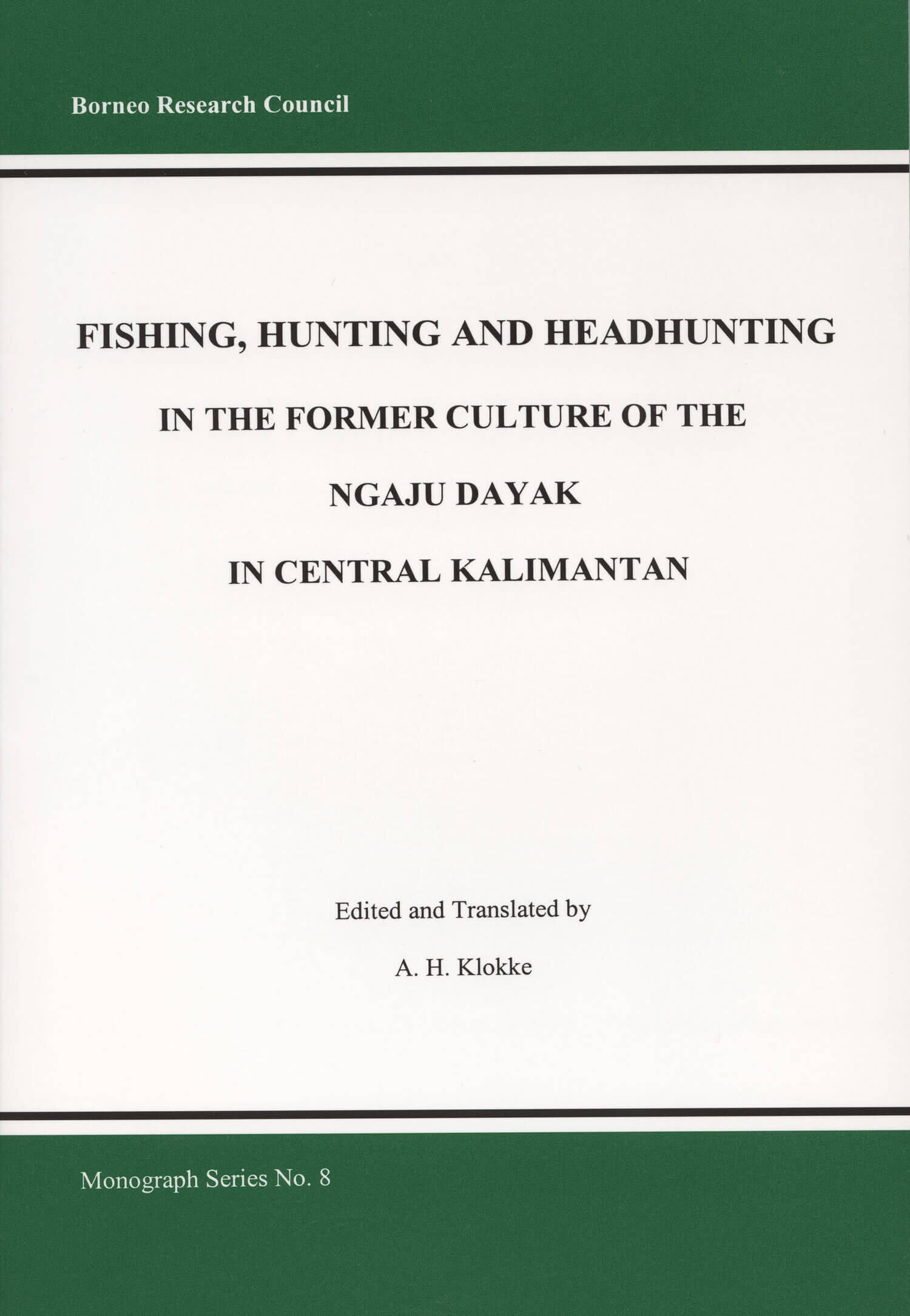
A. H. Klokke, Editor
The manuscripts presented here are partly from the legacy of H. Shaerer:
The notes on fishing and hunting, written by Numan Kunum, teacher at Tbg. Lahang, were completed in 1938. The provenance of the manuscript on headhunting is directly from the writer, Reverend Ison Birim, who had also written it in Tbg. Lahang in 1938 at the request of Schaerer.
The notes on fishing and hunting are important because there are few reports on these subjects, and it is said that nowadays much of this old craftsmanship has got in disuse.
Literature on the actual practice of headhunting are much scarcer than that on religious practices and the burial of the dead. In fact Birim's report on headhunting reads as a compelling eyewitness report, though Birim could only have obtained the material from eyewitnesses who lived before the abolition of headhunting in 1894.
Paperback
ISBN 1-929900-05-08
Discounted shipping rates for large orders are possible if an order is placed via email at brc@borneoresearchcouncil.org.
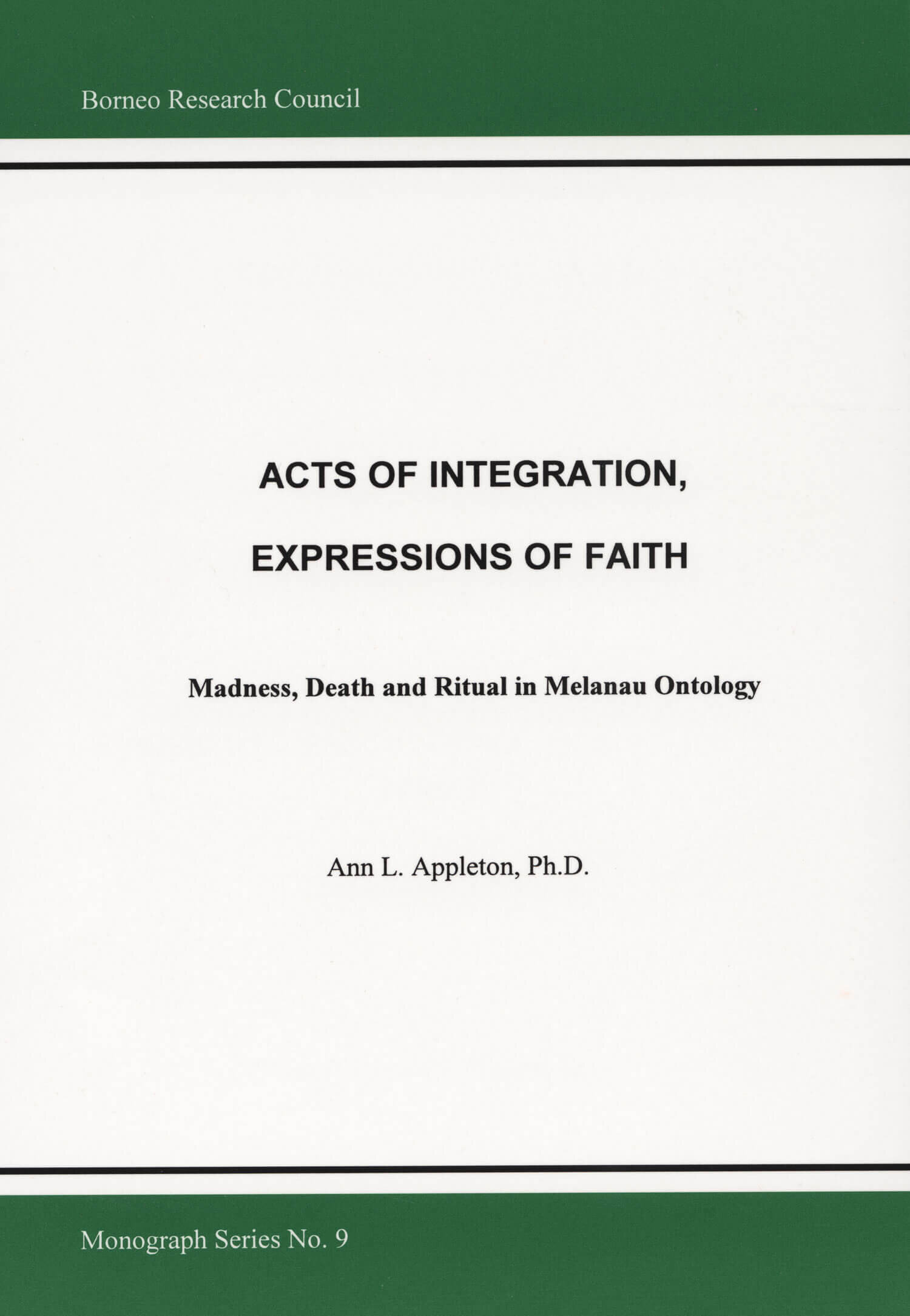
By Ann L. Appleton, Ph.D.
This monograph, based on Ann Appleton's doctoral research, is a significant ethnographic contribution to psychiatric anthropology, and more broadly to current debate within medical anthropology on the relationship between suffering, illness, healing and culture. It also represents a signal contribution to Melanau ethnography, developing a number of areas first essayed by Stephen Morris in his earlier work among the Oya Melanau.
Appleton's research was carried out in Mukah, in the heartland of the Melanau region of Sarawak. Lying on the coast in an angle between river and sea, with the larger city of Sibu to the south and the more rapidly developing Bintulu to the east, Mukah is part fishing village, part market town, and part government administrative center. As with the rest of Sarawak, its history is one of successive colonization, first by the Brunei Pengirans, who introduced Malay culture and Islam to the Melanau, and then by the Brookes, in whose time Christianity arrived in the form of Roman Catholicism.
Paperback
ISBN 1-929900-06-6
Discounted shipping rates for large orders are possible if an order is placed via email at brc@borneoresearchcouncil.org.
By Carol J. Pierce Colfer
Change has been a central feature of life in Kalimantan during the last half of the 20th century, and the analyses in this collection reflect that reality. The landscape has been nearly totally transformed and the people have both adapted to such changes and been among the actors creating them. This collection, which begins with analyses performed in the 1980s, continues throughout the 1990s, and ends with perspectives from the 21st century, captures the phenomenal changes, both environmental and social, that have characterized these people’s lives. Yet, there remains a core of behaviour and beliefs that makes the Uma’ Jalan the people they are.
Several chapters examine the differences between life in Long Ampung, a tiny community in the Apo Kayan from which the Uma’ Jalan have spread across eastern Borneo, and life in Long Segar, technically a resettlement community in central East Kalimantan. These early comparative analyses were undertaken in an attempt to capture the changes that had occurred as the people moved from their remote location to a more accessible area with more services. Another effort to capture change involved a series of land use histories that began in 1962, when Long Segar was initially settled, and continued through 1997.
Repeat visits to Long Segar have provided a third perspective from which to assess changes—through direct observation over time, focusing on the various aspects of Uma’ Jalan lives and their resource management practices (see Annex 1, for the schedule and purposes of repeat visits). Finally, there have been significant changes in the policy questions or issues of concern over the years. Such broader scale observations capture the changes in the national context, in the landscape, and in people’s lives (summarized in Chapter 16).
There are three central, conceptual reasons for putting these articles together into one volume. First, as global environmental awareness has increased, the issues addressed in the research reported here have become even more critical. Shifting cultivation and forest use and abuse are even more important now than when most of this research was conducted; yet the pool of detailed and systematic information available remains inadequate. Meanwhile the degradation, radical and probably irrevocable, of Borneo’s environment continues steadily, with ever more disturbing results. As the world begins to acknowledge and try to deal with global warming, its causes and possible amelioration, the importance of the actions of forest peoples are likely to gain recognition.
Second, the approach taken in this research, subsequently labeled “progressive contextualization” (Vayda 1983), was unusually productive. It allowed me to focus on specific, policy-relevant issues, without ignoring the context (or systems) of which those issues were a part. This approach, in my view, represents a step forward in making crucial ethnographic information more available, in a real sense, to policymakers (see Walters et al., 2008). It does, however, complicate the effort to reduce duplication in the chapters that follow.
Third, the importance of women’s behaviour and beliefs in tropical rainforest agroforestry systems has been largely ignored. This is puzzling in light of the widely recognized connections between population increase and rainforest destruction. Women are the bearers of children, a critical component of population increase. Because of this a full understanding of their behaviour, perceptions and motivations is essential; yet few researchers expend much effort documenting the aspects of women’s lives that affect the forest. Indeed, one finds a curious reticence on the part of many biological scientists to deal with the population issue at all, beyond the sweeping recognition that population is abstractly important.
Additionally as over half the global population, women like men represent a human resource with knowledge, energy, and organizational ability to contribute. Many would argue that women’s rights have also been fairly consistently trampled. Women’s significant involvement in Bornean forest management will become clear in the following chapters. If we are to incorporate people into conservation planning and policy (as I believe, in recognition of their rights and their well being, we must), women’s participation is, if anything, even more important than men’s.
Only in recent decades has anthropology begun to make a substantial contribution to natural resource management, as the conceptual links have become increasingly obvious. Natural resource management seeks to rationalize the human use of resources. Anthropology has, for decades, looked at the ways people use their resources. But practitioners of the respective fields have tended to talk past each other. This volume provides anthropological findings pertaining to natural resource management, in the hope and belief that greater collaboration will result in improved analyses, and thus greater utility, for both disciplines. A more effective mesh between these two fields should yield information that is directly useful for understanding people’s lifeways, for protecting the global environment, and for making “development” more beneficial for rural people.
Paperback
ISBN 1-929900-10-4
Discounted shipping rates for large orders are possible if an order is placed via email at brc@borneoresearchcouncil.org.

Laura P. Appell-Warren, Editor
In 1949 Monica Freeman left her life in England and made her way to Sarawak where she joined her husband Derek who was engaged in anthropological fieldwork among the Iban of Sungai [river] Sut. This was an extraordinary voyage for a young woman during the post World War II era, and she met with opposition, adventure and hardship as she traveled and worked with her husband.
During her time in Sarawak Monica kept a series of diaries and sent letters home to her mother in England. These diaries and letters are a personal record of the daily events in the lives of Monica and Derek Freeman and were not written with the intention of ever being published. However, these diaries are also a rich source of information about both the Iban and the fieldwork process, and as such they are worthy of publication. In these letters and diaries Monica vividly recounts her life during the fieldwork period. Her sensitivity to the peoples she was living among, and her honesty as she recounts the trials and tribulations of doing fieldwork, are remarkable. Many of us who have gone into the field with close family members will recognize and appreciate the moments in which she recounts episodes of disagreement and “feuds” with her spouse. These moments add a level of authenticity to this body of work and humanize both Monica and the fieldwork process. As one reads these letters and diary entries one begins to fall into the world of Sungai Sut and Rumah [longhouse] Nyala during the years of 1949-1951.
Most noteworthy however, are Monica’s Iban drawings and paintings. These drawings are ethnographically precise and many were later used to illustrate Derek Freeman’s writings as well as to illustrate The Encyclopedia of Iban Studies. In addition to their ethnographic precision these drawings deserve attention because of the way in which they so exactly capture a long lost moment in time. All are breathtakingly beautiful. And, some, as you can see in the following sketch, reflect the good cheer and sense of humor with which Monica Freeman approached life in the field.
This volume brings together, for the first time, her diaries, letters and drawings. They are a tribute to a young woman who had to be tough as nails, resilient, flexible, cheerful and adventurous to engage in such an undertaking. Having met Monica Freeman I can attest to the fact that she is all of these things.
Hardback
ISBN 1-929900-13-9
Discounted shipping rates for large orders are possible if an order is placed via email at brc@borneoresearchcouncil.org.
By Eva Maria Kershaw and Roger Kershaw
The short study is one fruit of the authors’ ten-year stay in the Sultanate of Brunei, 1984-94. Topics covered include general customs, marriage customs, death rites as well as ethnographic notes on birth, marriage and death.
According to a review by Monica Janowski of SOAS, this book is “essentially a list of adat rules. It is argued by the authors that it is somewhat sanitized of religious elements. This is due to the problems associated with animist beliefs in the context of Muslim Brunei...The introduction includes discussion of ideas around the nation, nationalism and ethnic identity in the Brunei context and the problems associated with this in relation to Dusun identity in Brunei...The desire to achieve a compilation of adat rules accepted formally by the Brunei State is taken by the authors to be an attempt to assert and to have accepted Dusun identity and ‘nationhood’...The book is useful and interesting in presenting a set of Dusun adat rules, as compiled by a group of educated Dusun and reflecting their perception of what such rules should constitute. It is also interesting to have notes on the reactions of village-based Dusun on their content.”
Paperback
ISBN 1-929900-12-0
Discounted shipping rates for large orders are possible if an order is placed via email at brc@borneoresearchcouncil.org.
Anna Chur-Hansen, Ph.D. and George N. Appell, Ph.D., Editors
In his obituary, published in the Adelaiadean, Robert J. Barrett (1949-2007) was described as a remarkable and gifted clinician and scholar, as a gifted teacher and as a wise mentor. But, it was his unique training as both a clinical psychiatrist and a social anthropologist that allowed Barrett to undertake his groundbreaking research of the ethnopsychology, and psychiatric illnesses, of the Iban of the Saribas region of Sarawak, Malaysia.
In this seminal volume Chur-Hansen and Appell have brought together the collected works of Barrett. These works range from Barrett’s own reflections on his cultural roots to his discussions of Iban ethnopsychology and psychiatric illness to reflections on the ethical issues of conducting cross-cultural research. Scholars of Borneo and of ethnopsychology will find this volume to be essential to their research.
Paperback
ISBN 1-929900-14-7
Discounted shipping rates for large orders are possible if an order is placed via email at brc@borneoresearchcouncil.org.

By Pudarno Binchin
Paperback
ISBN 1-929900-17-1
2014
Discounted shipping rates for large orders are possible if an order is placed via email at brc@borneoresearchcouncil.org.

Peter Sercombe, Michael Boutin, and Adrian Clynes, Editors
Paperback
ISBN 1-929900-18-X
2014
Discounted shipping rates for large orders are possible if an order is placed via email at brc@borneoresearchcouncil.org.
By Virginie Roseberg
This book fills a gap in the literature on the subject of Brunei Malay traditional medicine, and provides valuable first-hand ethnographic data on the question of continuity and transformation of Brunei Malay traditional medicine in the face of assaults by representatives of Western medicine and Islamic reformists, who both regard traditional healing knowledge as “irrational, inefficient and superstitious”.
Roseberg also contributes new arguments to the heated debates about the limitations of the biomedical model. Presenting the constellation of factors that possibly contribute to the persistent popularity of traditional healers among some Brunei Malays, despite the increasing availability and pre-eminence of biomedicine, especially for the treatment of certain chronic diseases or psychosomatic disorders, or for “supernatural” illnesses that are excluded from the scope of biomedicine.
In addition, this book analyses the reasons for the intensification of Islamic themes in modern Brunei and examines the impact of the increasing Islamization of the Sultanate on Brunei Malay traditional healing practices that are characterized by an admixture of animistic, Indic, Persian and Islamic elements. It also evaluates the degree of success of the relentless efforts of the Bruneian religious authorities to dissuade Brunei Malays from resorting to “heretical” healing practices and encourage them to resort instead to “proper” Islamic medical treatment.
This book argues that the process of eradication of many “unorthodox” practices, such as the prescription of amulets and medicinal plants which are believed to have intrinsic magical powers, and the practice of sorcery, is far from being completed, because these practices have been responding for centuries to the social, personal and psychological needs of the Brunei Malays that Western medicine, religion and Islamic medicine fail to fulfill.
Paperback
ISBN 979-1-929900-22-0
Discounted shipping rates for large orders are possible if an order is placed via email at brc@borneoresearchcouncil.org.
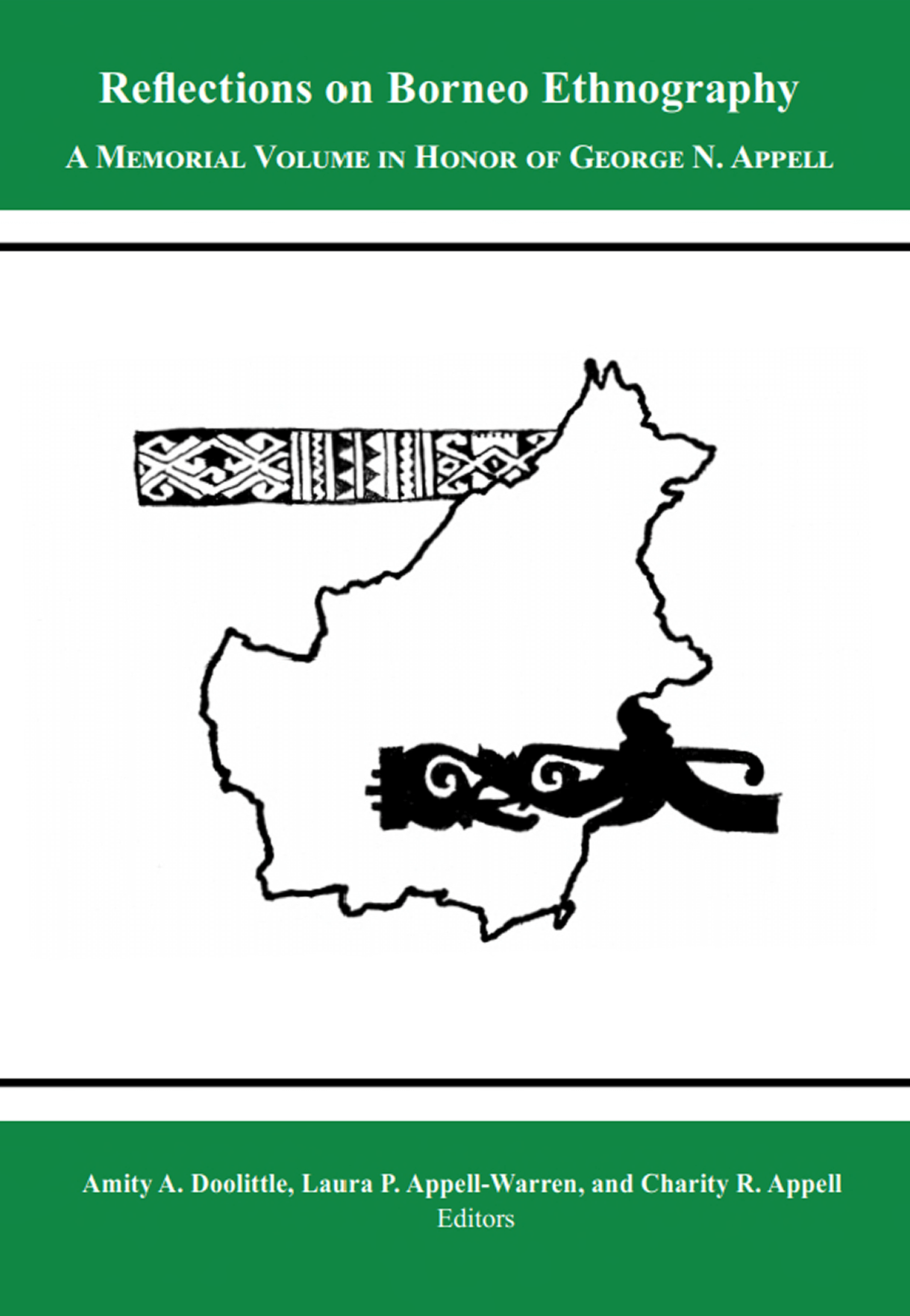
Amity A. Doolittle, Laura P. Appell-Warren, and Charity R. Appell, Editors
This volume, number 17 in the Monograph Series, focuses on the life and work of George N. Appell, and because they were both life partners and research partners, includes the work of his wife, Laura W.R. Appell. Collectively the chapters in this volume document George Appell’s intellectual life, his love of anthropology and the natural world, and his passion for the ethnographic study of the indigenous peoples of Borneo. The authors continue the dialogue started by and with Appell, which highlights the critical importance of preserving indigenous knowledge. Also reflected in the writings is the fact that all too often indigenous peoples have not been allowed to express full self-determination in shaping the pace at which they are incorporated into modern life. In this volume, we also see some glimpses of the complexity of the engagement between colonialists, missionaries, anthropologists, and indigenous peoples. Readers of the volume will not only learn about the work and life of George Appell but will be rewarded with the rich ethnographic data presented in the chapters.
Vinson H. Sutlive, Jr., Editor
Little is known about human sexuality in Borneo. From the information available, we may make a number of generalizations:
in all the indigenous societies women’s roles are highly valued
strategies for the socialization of children for the roles of female or male are as diverse as Borneo’s ethnic groups
there is considerable variation in attitudes and openness about sex
insofar as evidence is available rape does not occur within the societies represented in this volume
Hardback
ISBN 0-9629568-0-5
1991
Discounted shipping rates for large orders are possible if an order is placed via email at brc@borneoresearchcouncil.org.